

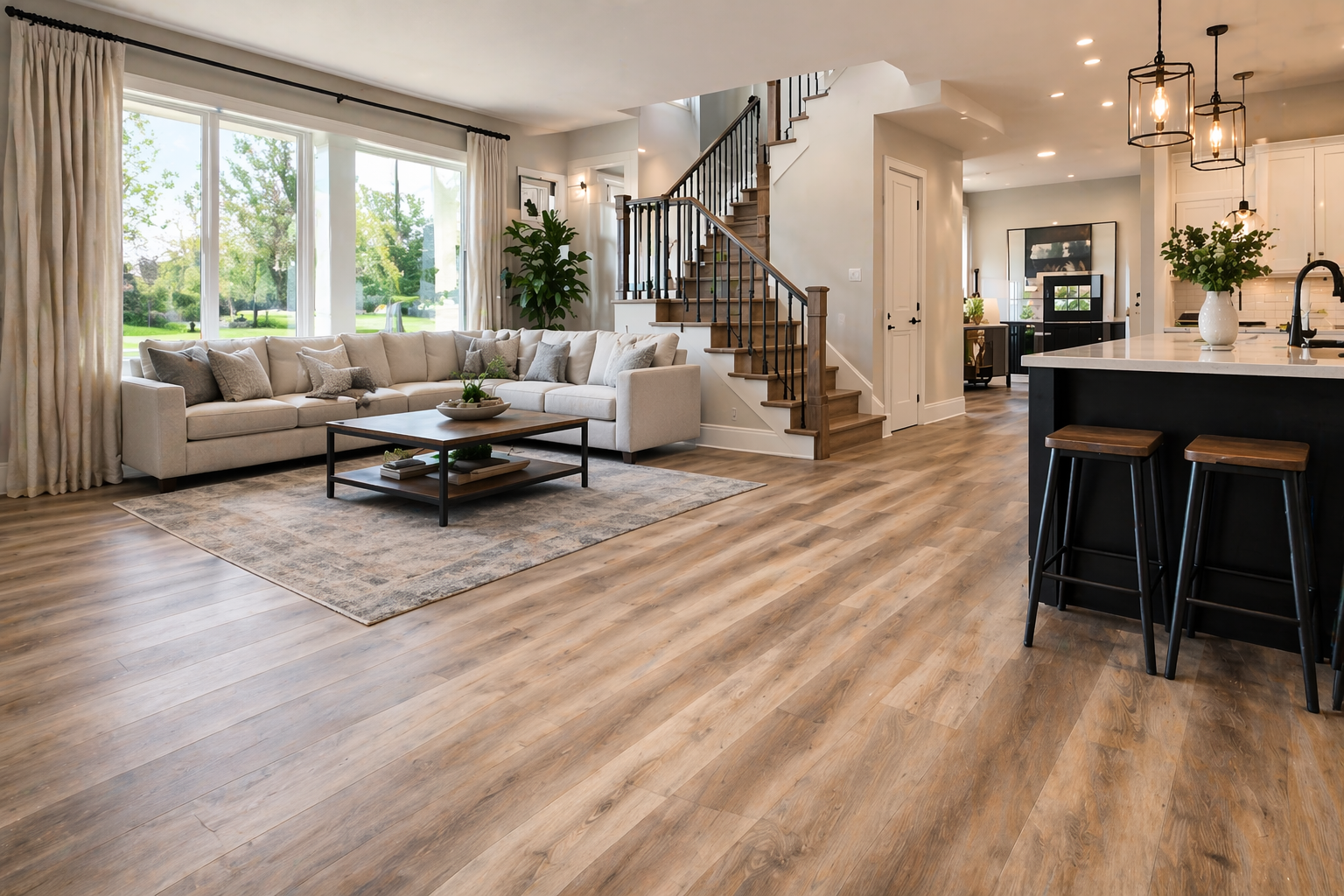
A whole-home flooring update usually starts the same way: one room needs help, then you notice the worn hallway, the dated kitchen, and the scratched living room floor right behind it. Before long, the project feels bigger than expected. We always tell homeowners to slow the process down and build the budget in layers, because good planning saves more money than chasing the lowest sticker price.
Start with the rooms that drive the cost
The fastest way to get your budget under control is to separate spaces by function. Dry living areas often fit best with wood, while baths, entries, and kitchens may need something harder-wearing or more moisture-friendly. When you price the house room by room, you can decide where a natural upgrade matters most and where a practical material will do the job just as well.
For many families, the backbone of the project starts with our hardwood options. That gives you a clear baseline for the main living spaces, then lets you compare where tile makes more sense for water, grit, and heavy traffic. In mud-prone entries or busy kitchens, our floor tile selection can protect the areas that take the most abuse without forcing the same material into every room.
Decide where to refinish and where to replace
One of the biggest budget mistakes we see is replacing wood that still has years left in it. If the boards are structurally sound, a worn finish, light cupping, or surface scratches may be fixable for far less than a full tear-out. That is especially true in older homes around Independence, where solid oak often deserves a second look before it gets covered up.
When the existing floor has good bones, our sand-and-refinish service can stretch the budget dramatically. Then you can reserve replacement dollars for rooms where the damage is deeper, the layout has changed, or you need a different surface altogether. The smartest whole-home plan is not all replacement or all restoration. It is knowing where each approach pays off.
Leave room for the parts people forget
Material is only part of the number. Tear-out, subfloor prep, transitions, trim work, moving furniture, and moisture-related corrections can all affect the final total. In our climate, seasonal humidity swings also matter, because they influence how wood performs and what prep may be needed before installation starts.
That is why we encourage shoppers to compare more than color and plank width. Looking through our in-stock flooring can uncover strong value on styles you can actually bring home sooner, and our current specials often help families balance a larger scope without dropping quality. If the project includes a kitchen or bath, a smaller tile accent can also add finish and durability without overwhelming the budget, especially when you pull from our kitchen tile styles instead of treating every surface the same.
Build the plan around timing, not just price
A realistic schedule can save almost as much as the product decision. If you are updating in phases, start with the rooms that create the most daily frustration, then group nearby spaces so installation is more efficient. We often help homeowners in Overland Park and the Northland map the work in an order that limits disruption while keeping the overall design cohesive.
That planning also helps you decide whether financing, in-stock products, or a mixed-material approach makes the most sense. A whole-home update does not have to happen all at once to feel intentional. It just needs a clear sequence, a realistic scope, and materials chosen for how you actually live.
When you are ready to price the project with real numbers, we can help you compare options room by room and build a plan around your goals with a free in-home estimate.


