

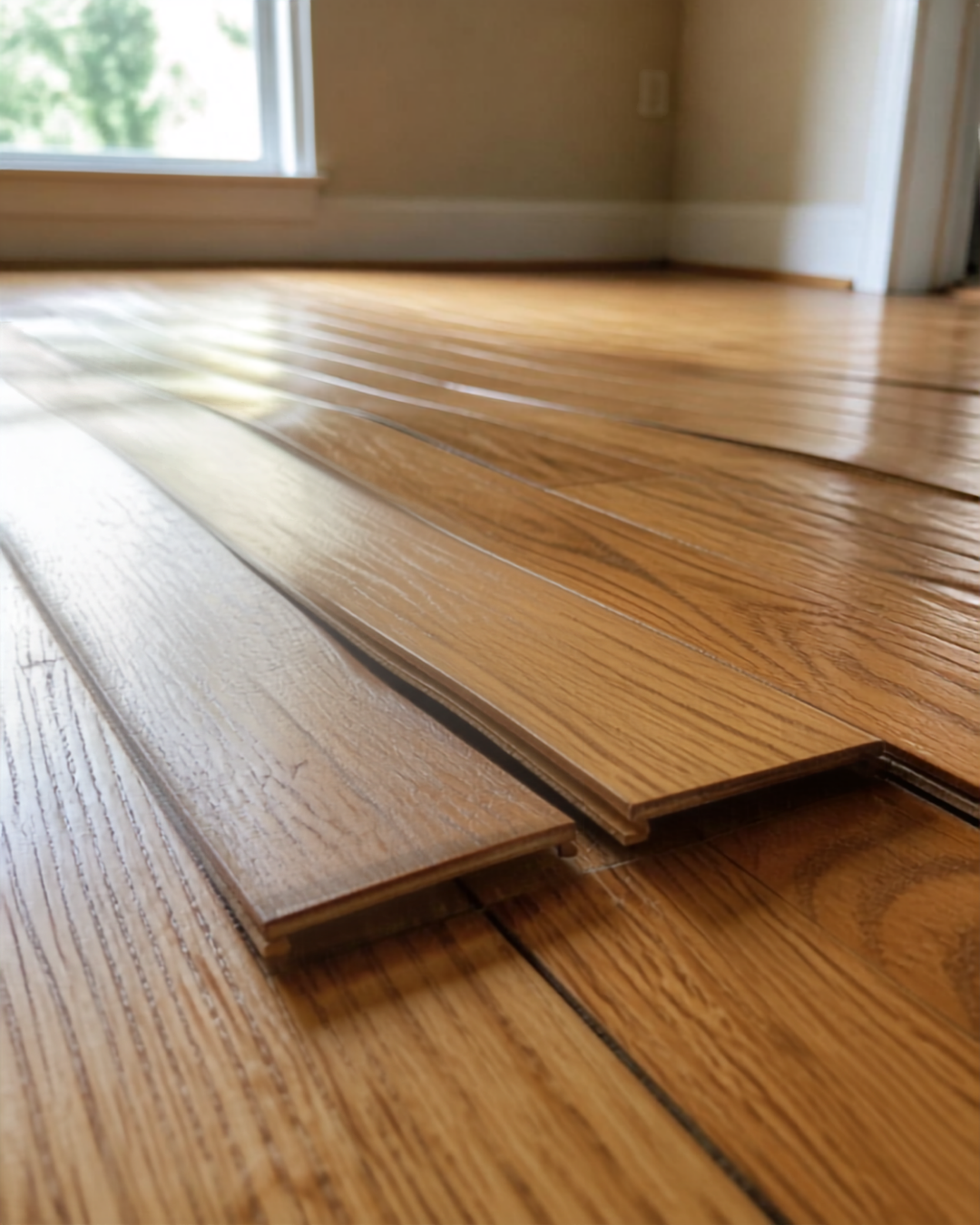
A July thunderstorm rolls through Overland Park, the basement stays damp, and a few weeks later the edges of your oak planks begin to rise. That bowed, washboard-like appearance is called cupping. It usually means the wood has absorbed moisture unevenly, not that the floor has simply “worn out.”
In the Kansas City area, humidity swings make this problem especially frustrating. We move from muggy summers to dry, heated winters, and solid hardwood responds to those changes by expanding and contracting. The good news is that early cupping often points us toward a moisture problem we can correct before the boards need replacement.
What causes hardwood cupping?
Wood naturally takes in and releases moisture. Cupping develops when one side of a plank gains moisture faster than the other, causing the edges to curl higher than the center. Moisture may come from a damp basement or crawlspace, a plumbing leak, wet concrete, an improperly sealed subfloor, or repeated cleaning with too much water.
Summer air can also raise indoor humidity enough to affect flooring, particularly in rooms above basements. A leaking dishwasher or refrigerator supply line can create the same pattern in a smaller area. Even a wet-mopping routine that leaves water sitting on the surface can gradually contribute.
Installation conditions matter, too. Flooring needs time to acclimate to the home before installation, and the subfloor must be dry and properly prepared. Without suitable moisture testing and a vapor-control plan where needed, the boards may react after the project appears complete.
How can we tell whether moisture is still active?
We start by looking for the source rather than reaching for a sander. We check nearby plumbing, exterior doors, foundation walls, HVAC equipment, crawlspaces, and basement conditions. A musty odor, staining, cracked finish, or cupping that worsens after rain can help narrow down the cause.
Moisture meters give us a more useful picture than appearance alone. We compare readings in the affected area with readings from stable sections, while also checking indoor relative humidity. Most homes do best when indoor humidity stays reasonably consistent through the seasons, rather than swinging sharply between damp and dry.
Do not sand a cupped floor while the boards are still wet. Removing material too early can leave the surface flat temporarily, then create crowning or gaps as the wood dries. We first stop the intrusion, improve airflow or dehumidification, and allow the flooring and subfloor to reach a stable moisture condition.
When can cupped flooring be repaired?
Mild cupping may relax after the moisture imbalance is corrected. We then evaluate the board edges, fasteners, finish, and subfloor to decide whether the existing material can be saved. If the boards have not permanently distorted, our sand-and-refinish service can often restore a worn surface without the cost and disruption of a full replacement.
Severe cupping, black staining, delamination, or boards that remain permanently bent may require selective replacement. We match new material as closely as practical, then address the underlying moisture issue so the same failure does not return. In older Independence homes, preserving original oak can be worthwhile when the structure remains sound.
How do we prevent the problem?
Keep indoor humidity steady, wipe spills promptly, and use cleaning products sparingly. We also recommend maintaining gutters and downspouts, watching for foundation seepage, and checking appliances near wood floors. During installation, proper acclimation, subfloor preparation, and moisture testing are just as important as choosing the finish.
For rooms with recurring moisture concerns, we may compare solid wood with more dimensionally stable options. We keep hardwood flooring selections from quality brands at outlet pricing, so we can weigh appearance, construction, and budget together instead of treating every room the same.
Whether the answer is drying and refinishing or replacing a damaged section, we focus on the cause first. That approach protects your investment and helps your floor handle KC’s next humidity swing. Bring us the details of what you are seeing, and we can discuss a no-pressure estimate for the right repair or flooring plan.


