

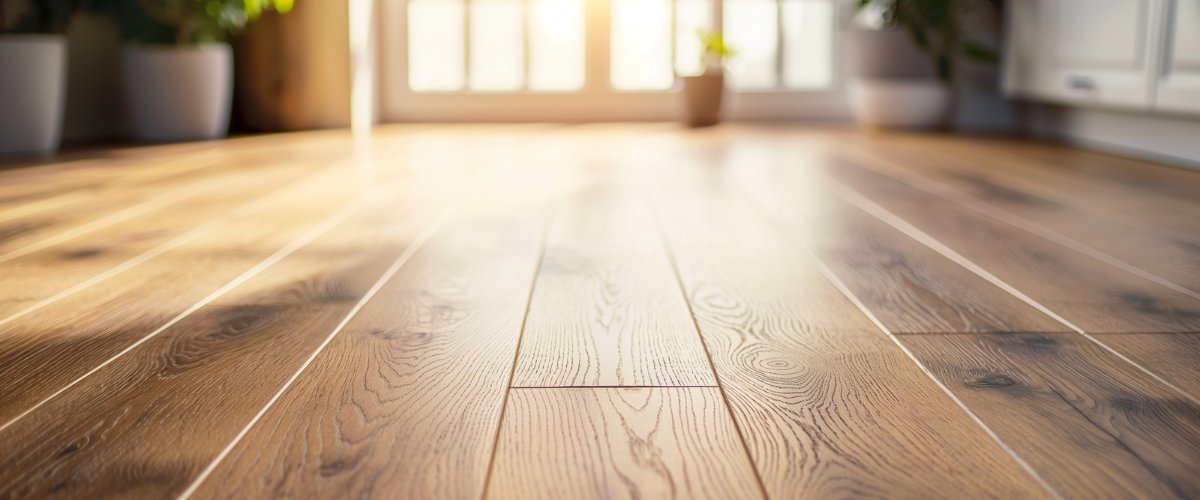
Thinking about new hardwood floors for your KC home? Your biggest decision isn't the color—it's how you plan to manage the dramatic climate swings. From bone-dry winters to swampy summers, Kansas City is tough on wood.
Here is a head-to-head breakdown of solid vs. engineered hardwood and your year-round strategy for keeping them beautiful.
1. Hardwood Head-to-Head: Stability is Key
The fundamental difference between solid and engineered wood lies in their reaction to moisture.
| Feature | Solid Hardwood | Engineered Hardwood |
| Structure | A single, continuous piece of hardwood from top to bottom. | A thin real wood veneer layered over a high-stability plywood core (often crisscrossed). |
| Pros | Can be sanded and refinished 5+ times, potentially lasting a lifetime. | Much more dimensionally stable; resists movement from moisture, ideal for basements or concrete slabs. |
| Cons | Highly susceptible to moisture changes. Shrinks in winter and swells in summer. | Limited refinishing (usually 1–2 times), depending on veneer thickness. |
In short: Solid hardwood is durable in terms of wear, but vulnerable to climate. Engineered hardwood is durable against climate movement, but vulnerable to excessive refinishing.
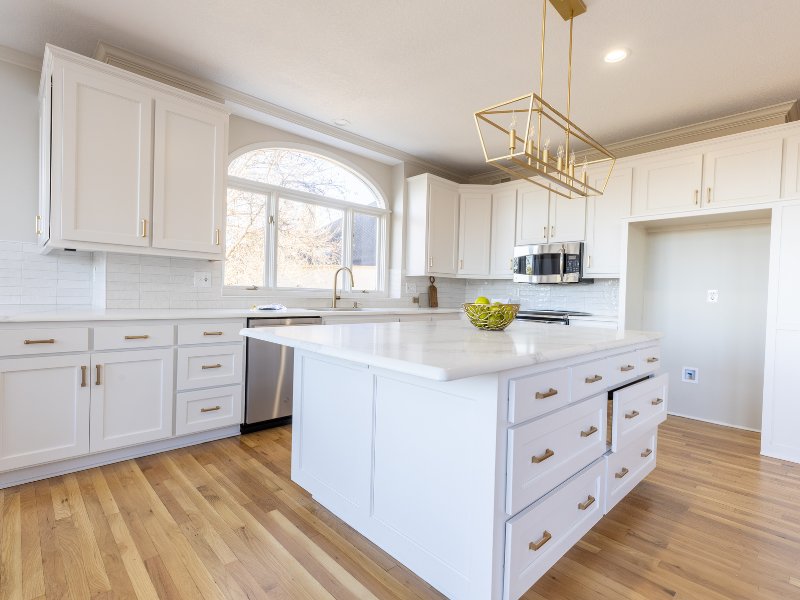
2. 🌡️ The Kansas City Climate & The Enemy of Wood
Kansas City's weather creates a worst-case scenario for wood. We swing from the need for max heat (stripping moisture) to high humidity (adding moisture).
● The Problem: KC experiences dramatic swings from bone-dry winter air (when the furnace runs) to swampy, humid summer air.
● The Target Zone: Hardwood (both types) is healthiest when the indoor Relative Humidity (RH) is consistently maintained between 30% and 50% (some manufacturers say 35%-55%).
When the RH goes outside this zone, your floor will move.
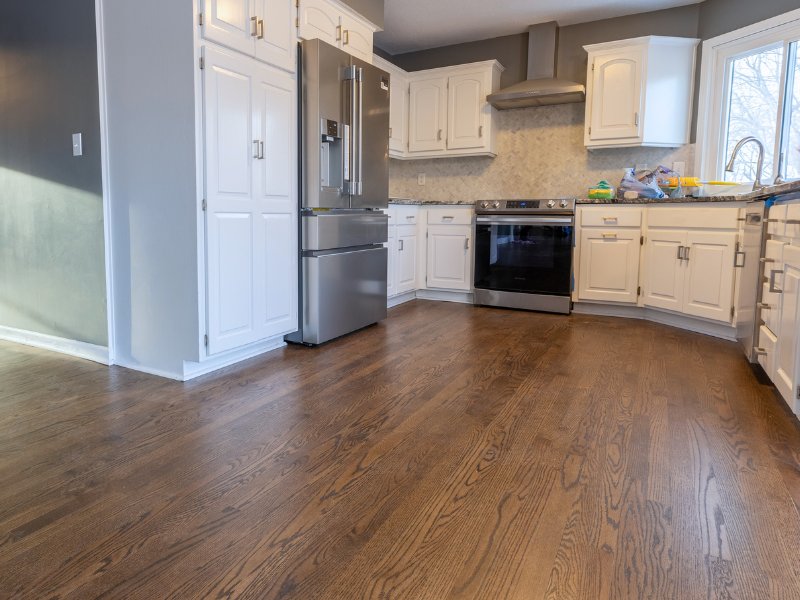
3. 🛠️ Your Year-Round Humidity Control Strategy
For any hardwood floor to thrive in KC, you need to proactively manage the air, not just the temperature.
Winter (The Humidifier)
The furnace is the enemy of solid hardwood in winter.
● The Risk: When your furnace runs constantly, it strips moisture from the air, often dropping the RH below 30%. This causes solid wood to shrink, resulting in unsightly gapping, cracking, and squeaking.
● The Solution: A whole-house humidifier (integrated with your furnace) is highly recommended for any home with solid hardwood. It automatically adds moisture to maintain that crucial 30%-50% range, protecting your floor (and often your sinuses and furniture, too!).
Summer (The Dehumidifier)
Kansas City summers bring sticky, oppressive air that threatens to swell your floors.
● The Risk: High summer humidity (especially in basements or during long rainy periods) pushes the RH above 50%. This causes wood to swell, risking the severe damage of cupping or buckling.
● The Solution: While your air conditioner provides some dehumidification, in the stickiest months, a whole-house dehumidifier (or a dedicated, high-capacity unit for basements) is the best protection against swelling and moisture damage.

Conclusion: Choose Your Floor, Control Your Air
Choosing a hardwood floor in Kansas City means making a commitment to your home's air quality.
● If you choose Solid Hardwood: You are choosing a premium product with maximum refinishing potential, but you must commit to year-round climate management (humidifier in winter, AC/dehumidifier in summer).
● If you choose Engineered Hardwood: You are choosing greater stability, which handles minor fluctuations better, but you should still monitor and control the air for the floor's ultimate longevity and to protect your investment.
Do you know which type of hardwood is currently in your home, or are you still trying to decide? Let our hardwood flooring experts help.


