

A kitchen floor can look like a simple weekend upgrade until the estimate includes demolition, subfloor repairs, trim, delivery, and installation. We see this often in Overland Park homes, where the tile itself may be only one part of the final investment. A realistic budget starts by separating every cost category before you choose a color or pattern.
Start With the Whole Project
Measure the room’s length and width, then add areas such as closets, pantries, entry halls, or backsplashes if they are part of the same job. That square footage gives you a starting point, but we recommend adding roughly 10% for cuts and future repairs. Diagonal layouts, small rooms, multiple doorways, and patterned materials can require more overage.
The material price also varies by application. A durable porcelain floor may cost more than a basic ceramic option, while a handmade-look backsplash may require extra labor because each piece needs careful placement. Our floor tile selection can help you compare practical options before you build the rest of the estimate.
Do not forget the supporting materials. Thinset, grout, edging, waterproofing, transition strips, sealers, and underlayment may all affect the total. Some rooms need more preparation than others, especially older kitchens, bathrooms, and basements where moisture or uneven surfaces have been an issue.
Ask What Installation Includes
A low installation quote is not always the lowest finished cost. Before approving the work, ask whether the price includes removal of the existing surface, disposal, floor preparation, furniture moving, transitions, and final cleanup. Clarify whether repairs to the subfloor are included or priced separately after demolition.
We inspect the conditions that can change the scope, because cracked tile often points to movement below rather than a problem with the tile itself. Concrete may need patching, wood substrates may require reinforcement, and damp basement areas may need moisture planning before installation begins. Addressing those details early is far less disruptive than discovering them after materials arrive.
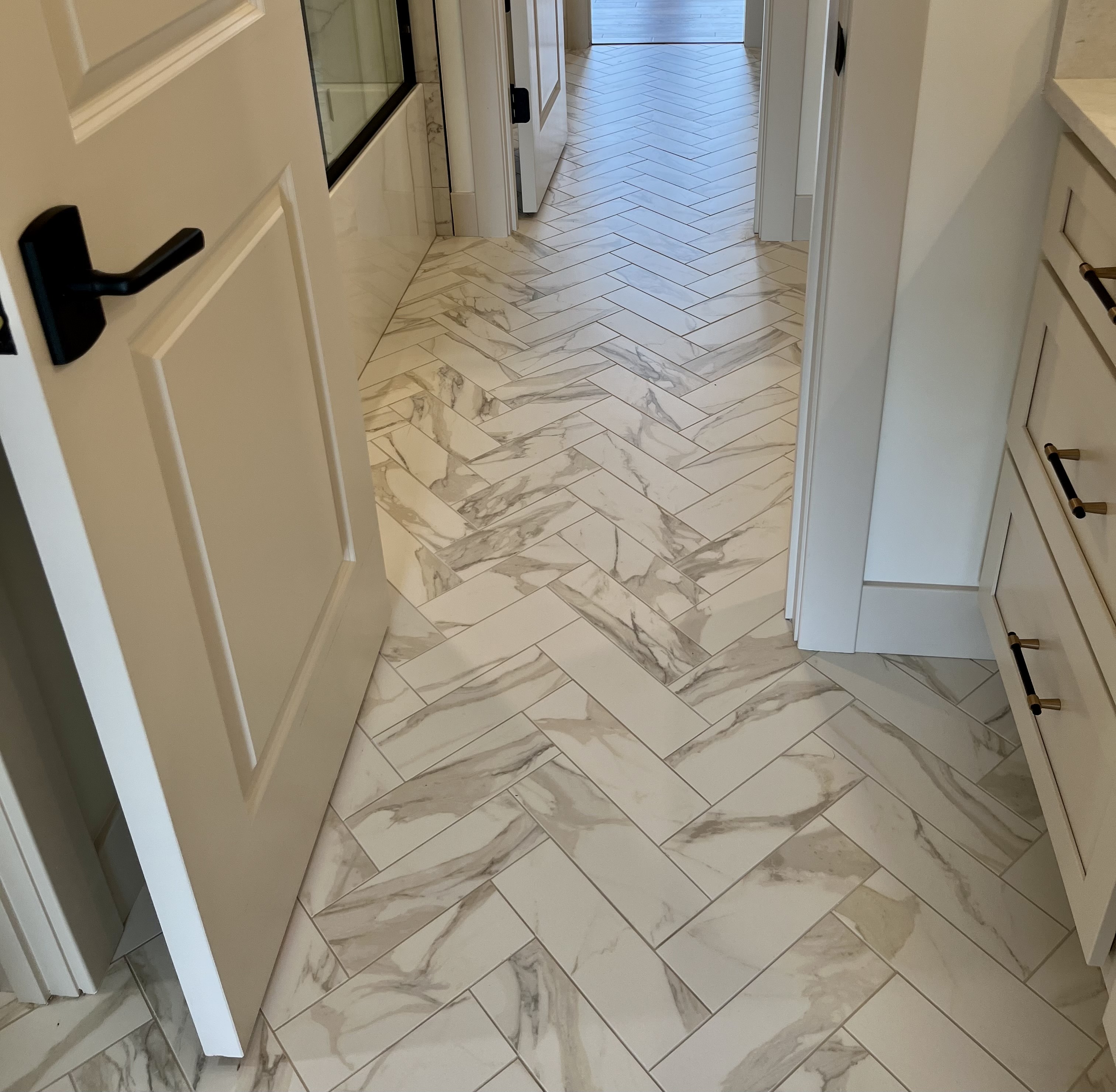
Labor can also increase when the design becomes more complex. Large-format tile may need a flatter surface, mosaics take longer to set, and a herringbone pattern creates more cuts than a straight layout. A straightforward design is not necessarily plain; it can reduce waste and keep the installation easier to predict.
Protect the Budget During Selection
Outlet pricing gives you more room to choose a quality product without spending the entire budget on material. We keep an eye on in-stock flooring deals, which can reduce lead times and help you avoid paying a premium for a special-order product. Availability matters when you are coordinating installers, cabinets, appliances, or a move-in date.
Samples also help prevent expensive changes later. View the tile in morning and evening light, place it beside your cabinets or paint, and check how the surface feels underfoot. For larger projects, compare the installed cost rather than the price per box, since a cheaper product with high waste or difficult labor may not save money overall.
If you are balancing several rooms, decide where durability matters most. Porcelain is a strong choice for busy entries exposed to Kansas City grit and winter moisture, while a decorative wall tile may allow you to spend less on a smaller surface without sacrificing visual impact.
Build In a Practical Cushion
Even a careful estimate should include a contingency, commonly around 10% to 15% for unknown conditions. Older homes may reveal damaged underlayment, hidden water issues, or layers of flooring that take longer to remove. Setting aside that cushion protects the project from turning into a rushed compromise.
We also recommend asking about payment options before work begins. Our financing options may help you preserve cash for other renovation expenses while keeping the flooring plan intact. You can visit the Liberty showroom or another nearby location to compare samples and discuss the scope in person.
Plan With Confidence
A good tile budget accounts for material, waste, preparation, installation, finishing details, and a reasonable reserve. Bring us your measurements, photos, and project goals, and we can help you compare choices that fit both the room and your spending plan. Start with a free in-home estimate so you can move forward with clearer numbers and fewer surprises.


