

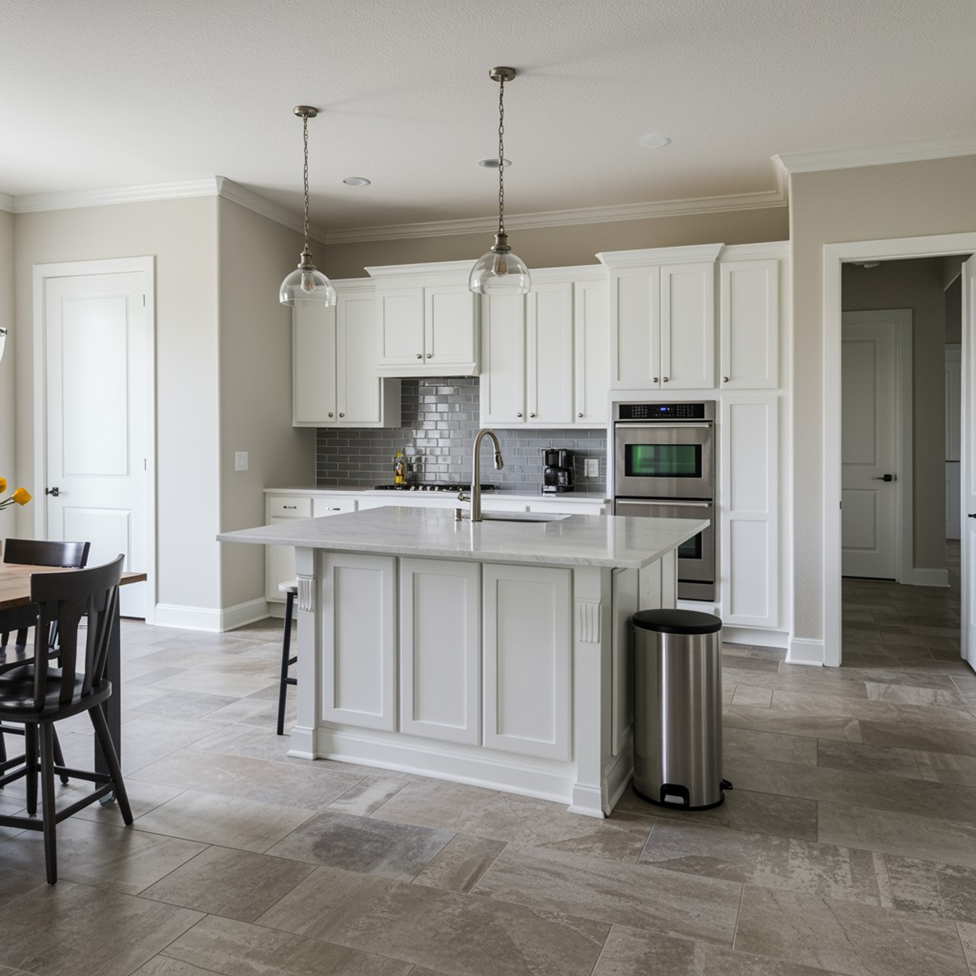
Mixing flooring styles can elevate your home, or completely disrupt it.
I see this all the time. A beautiful hardwood in the living room, tile in the kitchen, carpet down the hall… and somehow the house feels broken up instead of balanced. The problem usually isn’t the flooring itself, it’s how the materials connect.
The good news? Mixing flooring styles can look intentional, polished, and designer-approved. You just need a few smart guidelines to keep your home flowing beautifully.
If you’re a Kansas City homeowner working with open layouts, older floor plans, or rooms that serve different purposes, this guide will show you how to blend flooring styles without creating visual chaos, and how to make every space feel like it belongs to the same home.
1. Start With a Clear “Main” Flooring Choice
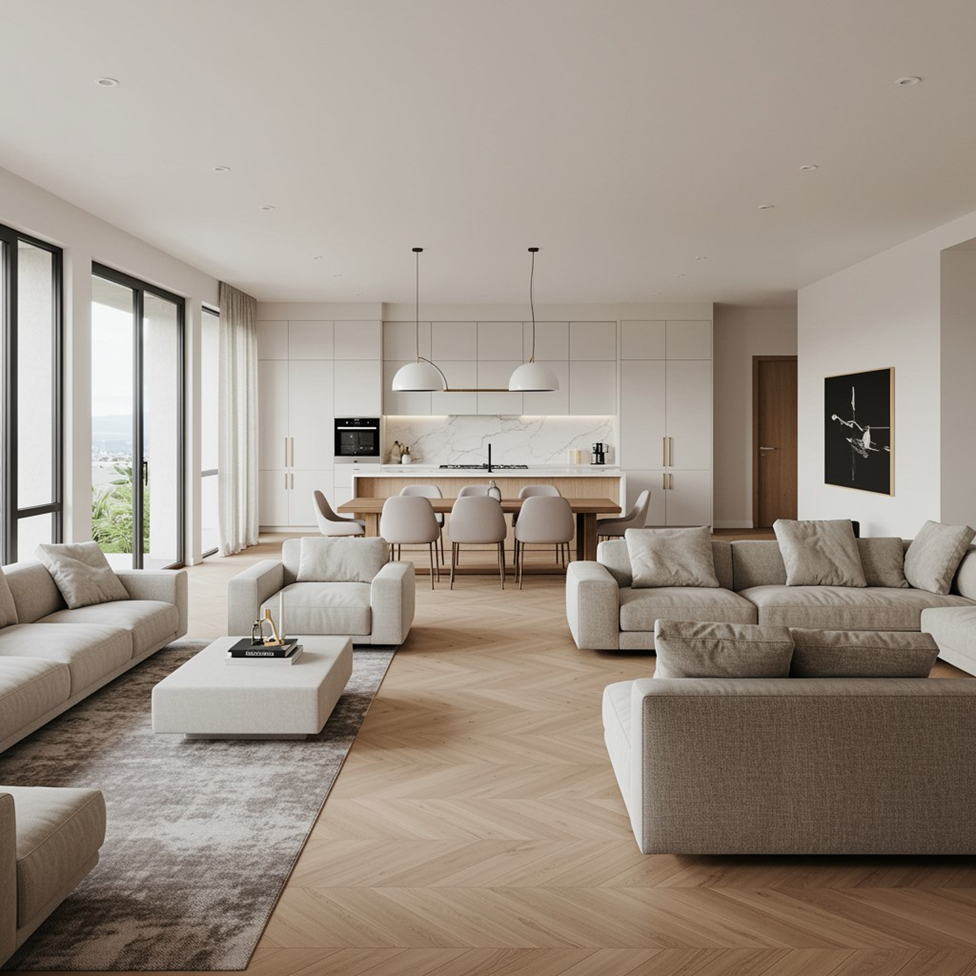
Every well-designed home needs a foundation. When too many flooring styles compete for attention, the eye doesn’t know where to land.
Choose one primary flooring material for your main living areas, typically:
Living room
Kitchen
Dining space
Hallways
In many Kansas City homes, this is:
Luxury vinyl plank
Hardwood
Engineered wood
This main floor acts as the visual anchor. Once that’s established, secondary flooring (like carpet or tile) feels intentional instead of random.
Avery Tip:
If you’re unsure which floor should be primary, choose the one that covers the largest continuous area of your home.
2. Keep Color Tones Consistent Across Materials
This is one of the biggest mistakes I see, and one of the easiest to fix.
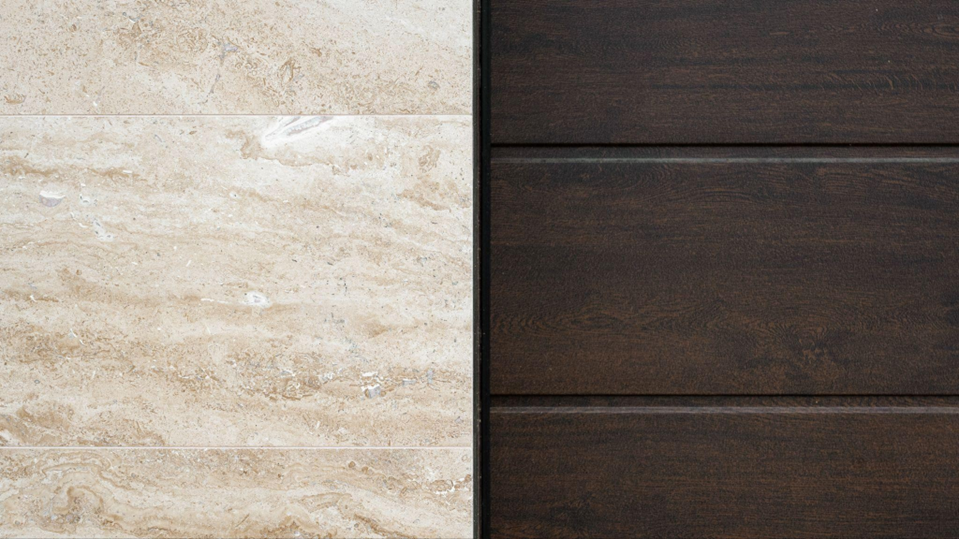
You can mix materials, but you should avoid mixing warm and cool tones without intention. A warm oak next to a cool gray tile can feel disconnected, even if both floors are beautiful on their own.
What works well together:
Warm wood + warm neutral tile
Cool-toned vinyl + gray-beige (greige) carpet
Natural oak + stone-look porcelain
What causes choppiness:
Yellow wood next to blue-gray flooring
High-contrast transitions without separation
Floors fighting for attention
Design rule:
Your floors don’t need to match, they need to agree.
3. Use Flooring to Define Spaces (Not Divide Them)
In open-concept Kansas City homes, flooring can help define areas without breaking flow. For example:
Same flooring in living + dining, tile in kitchen
Hard surface in main areas, carpet in bedrooms
Tile in entryway, continuous flooring beyond
The key is intentional placement, not constant switching.
Avery Tip:
If you change flooring, do it where it makes sense, doorways, natural breaks, or architectural transitions, not in the middle of a space.
4. Choose the Right Transition Pieces (They Matter More Than You Think)
Transitions are not just functional, they’re visual.
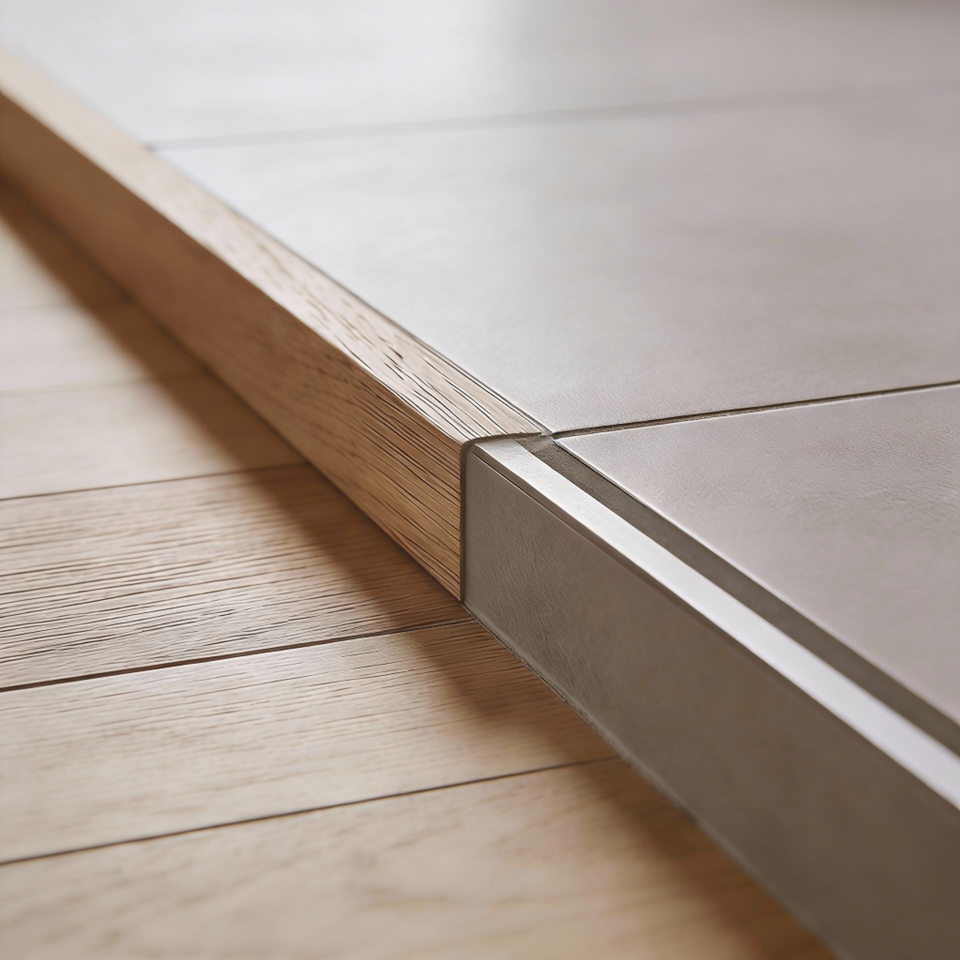
Poor transitions can make even great flooring look sloppy. Clean, subtle transitions help your floors blend seamlessly.
Best transition practices:
Use low-profile reducers or T-moldings
Match transition color to one of the floors
Avoid bulky or outdated metal strips
Keep transitions consistent throughout the home
When transitions are done right, most people won’t even notice them, and that’s exactly the goal.
5. Mix Texture, Not Chaos
Texture is where mixed flooring really shines. You might combine:
Smooth hardwood with soft carpet
Wood-look vinyl with patterned tile
Matte finishes with subtle grain variation
This adds depth and interest without overwhelming the space.
Design mindset:
Contrast should feel thoughtful, not loud.
If one floor is visually busy, let the other be calm. If one is bold, let the next one support it quietly.
6. Keep Flooring Direction Consistent Where Possible
Plank direction plays a huge role in flow.
If your flooring runs one direction in the living room and suddenly flips in the hallway, it can feel disjointed.
Best practice:
Run planks in the same direction through connected spaces
Use direction changes only when rooms are fully separate
Let flooring guide movement through the home
This is especially important in ranch-style and split-level Kansas City homes.
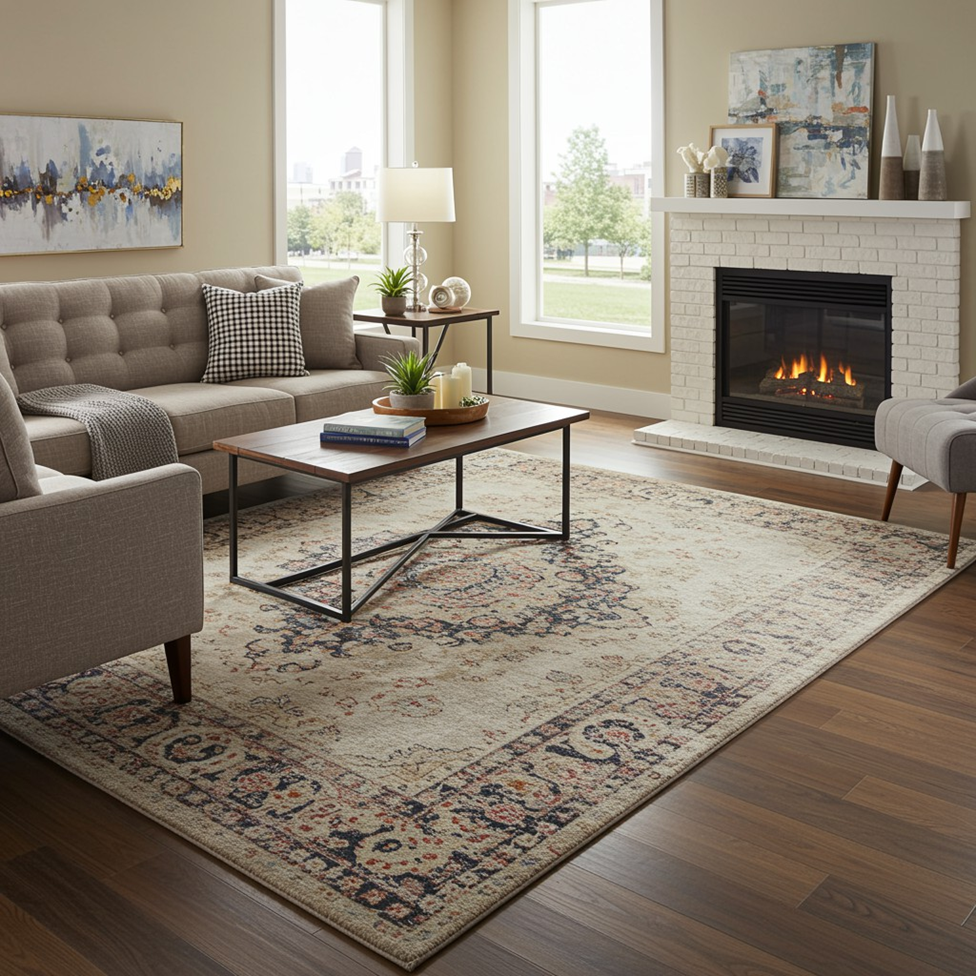
7. Use Rugs to Bridge Flooring Styles
Area rugs are one of the easiest tools for blending different floors. They help:
Soften transitions
Add warmth and comfort
Visually connect rooms
Reduce contrast between materials
For example, a rug that pulls tones from both your hardwood and tile can make the transition feel seamless.
Avery Tip:
Choose rugs with subtle patterns or mixed fibers, they’re better at blending than solid colors.
8. Think About How You Live in Each Space
Mixed flooring should support your lifestyle, not fight it. Ask yourself:
Where do shoes come off?
Where do pets spend the most time?
Where does noise matter most?
Where do spills happen?
It makes sense to have:
Waterproof flooring in kitchens and entryways
Carpet in bedrooms and basements
Durable hard surfaces in main living areas
When flooring matches how you live, it always feels more natural.
9. Common Flooring Mixing Mistakes to Avoid
Here are the most common issues that make homes feel choppy:
❌ Too many flooring changes in small spaces
❌ Ignoring undertones
❌ Inconsistent plank direction
❌ Heavy transitions
❌ Mixing styles with no visual connection
If something feels “off,” it usually means one of these rules was broken.
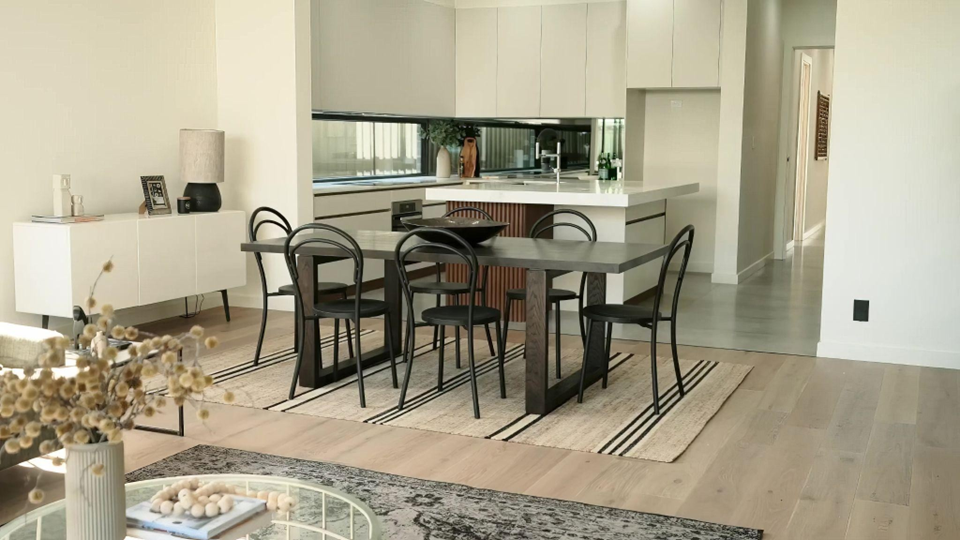
10. When in Doubt, Simplify
Design doesn’t have to be complicated to be beautiful. If you’re overwhelmed:
Use one flooring for main areas
One for private spaces
One for wet zones
That alone creates a cohesive, calm home, and still allows for variety.
Where to Get Help Mixing Floors the Right Way
Choosing flooring is one thing.
Designing how it all works together is another.
At Big Bob’s Flooring Outlet Kansas City, we help homeowners:
Compare materials side by side
Match tones and textures
Plan transitions and layouts
Create flow across the entire home
With locations in Overland Park, Liberty, and Independence, our team helps make mixed flooring feel easy, not overwhelming.
Final Thought: Flow Is the Secret to a Home That Feels Right
The best-designed homes don’t feel busy or broken up. They feel intentional.
When flooring styles work together, in color, texture, and layout, your home feels calmer, more open, and more livable.
✨ Function meets flair
✨ Beauty without the fuss
✨ Design that works as hard as you do
And it all starts from the ground up.