

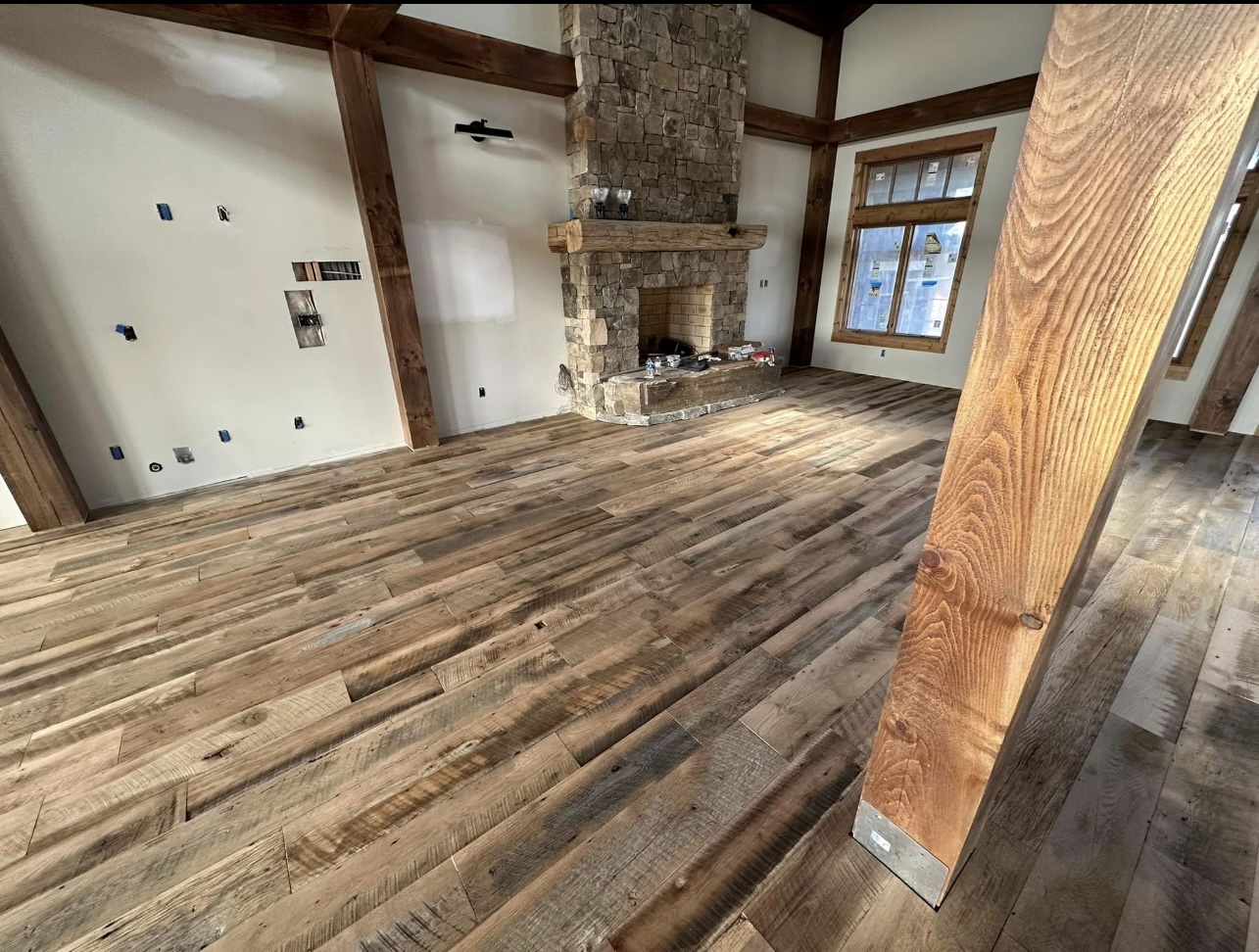
A century-old farmhouse beam can look beautiful in a new living room, but reclaimed hardwood is not a purchase we recommend making on appearance alone. In the Kansas City area, changing humidity, basement moisture, and wide temperature swings can expose problems that were hidden under an old finish or inside a salvaged board.
Before you fall for a distressed surface or saw marks, ask where the material came from, how it was prepared, and whether it suits your home. We help homeowners compare the character they want with the performance they need.
Start With the Wood’s History
Ask about the source, age, species, and previous use. Barn oak, old-growth pine, and salvaged factory flooring can each have a different density, grain pattern, nail-hole profile, and stability. The history also affects how much usable material remains after damaged or contaminated sections are removed.
A trustworthy seller should explain whether the boards were kiln-dried, inspected for insects, and tested for excessive moisture. Reclaimed material may have spent decades exposed to weather or unconditioned air, so it needs time to adjust to your home before installation. A compelling story is valuable, but documented preparation matters more.
We also suggest asking how the boards were milled. Some reclaimed planks are ready for a conventional installation, while others require custom milling because their backs, edges, or thicknesses are inconsistent. If you want a similar look with more predictable sizing, compare it with our hardwood flooring options, including current products made to deliver rustic character.
Find Out What “Rustic” Really Means
“Rustic” can describe several different finishes. It might mean natural knots, handscraped texture, wide plank construction, wire-brushed grain, visible mineral streaks, or deliberate color variation. Ask whether the appearance comes from the wood itself, a stain, a surface treatment, or a combination.
You should also ask how the floor will look after years of traffic. Deep texture can collect grit, and heavy distressing may make future repairs less seamless. A lighter, factory-applied finish can offer the weathered style without requiring the same maintenance as unfinished reclaimed boards.
Samples are especially important because reclaimed floors vary from board to board. View them in both daylight and evening lighting, then place them beside your cabinets, trim, and paint colors. Our in-stock selections can also help you compare rustic looks that are available now rather than waiting on a specialty order.
Match the Floor to Your House
In older Overland Park homes, original oak may have enough thickness for restoration, but that is something we confirm rather than assume. Check the remaining wear layer, previous sanding history, loose boards, and subfloor condition before deciding whether to replace the floor.
If the existing material is structurally sound, our sand-and-refinish service may restore warmth and character at a lower cost than installing new reclaimed boards. We can also identify areas where moisture, movement, or unevenness would make refinishing a poor choice.
For a new installation, ask how the product handles seasonal movement and whether the installer will measure moisture in both the hardwood and subfloor. That step matters in homes with below-grade rooms, crawl spaces, or concrete slabs. A rustic finish cannot compensate for an installation environment that is too damp.
Know the Total Cost Before You Commit
Reclaimed flooring often requires extra sorting, milling, waste allowance, subfloor preparation, and specialized installation. Request an estimate that separates the material, preparation, labor, transitions, trim, and finishing work. Comparing only the price per square foot can make an unusual product appear less expensive than it becomes.
We have served KC-area families for nearly 40 years, and our outlet approach helps us pair quality brands with practical budgets. Whether you choose authentic salvaged boards or a new floor with a timeworn look, the best decision starts with honest answers about condition, care, and installation.
Bring your measurements and photos to one of our showrooms, including our Independence location, so we can help narrow the choices. When you are ready to discuss your project, request a no-pressure estimate and we’ll help you plan the next step.


