

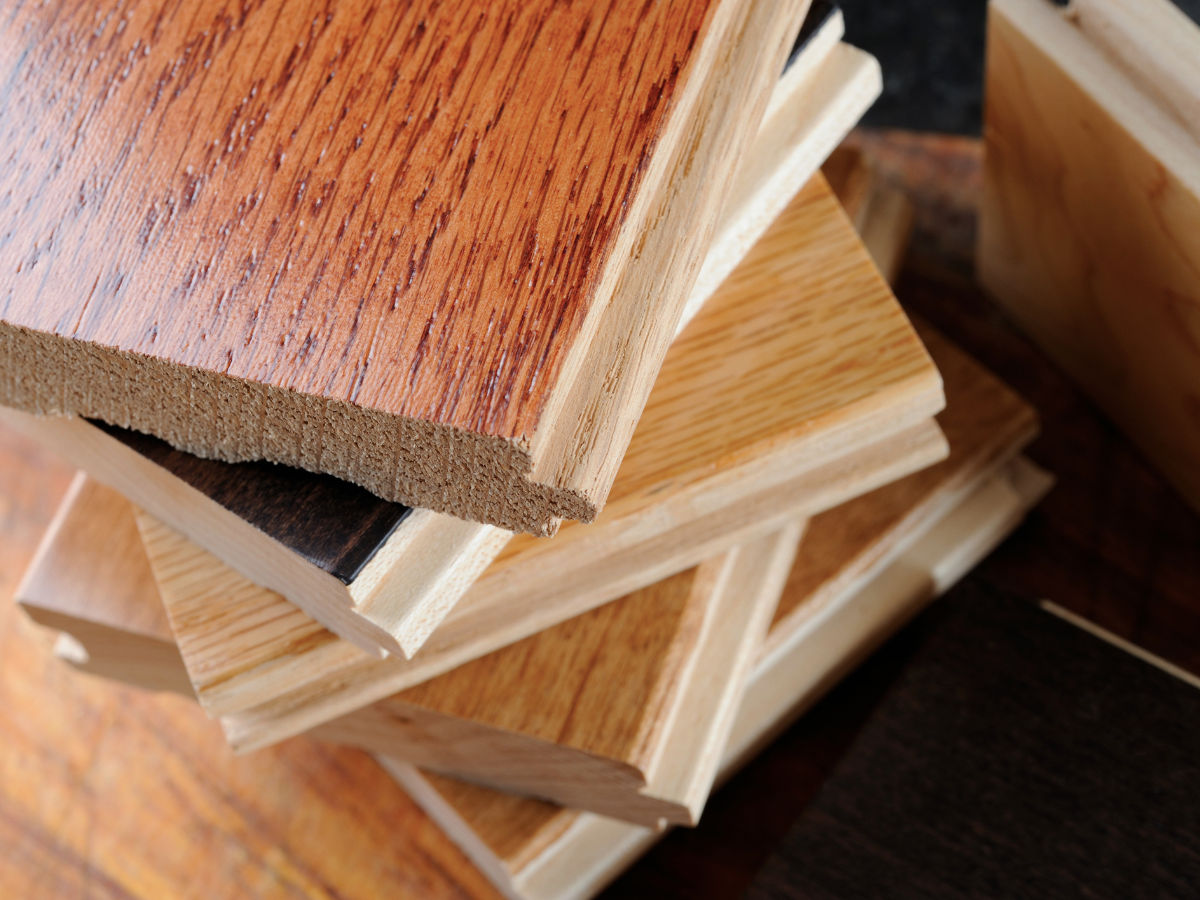
A 1960s Overland Park ranch may have original oak under the carpet, while a newer home nearby has a concrete basement slab waiting for a warmer finish. Both spaces can benefit from the character of real wood, but they do not call for the same construction. Choosing between solid and engineered hardwood starts with the room’s moisture, subfloor, and daily traffic—not just the color of the plank.
Where Solid Hardwood Makes Sense
Solid hardwood is milled from one piece of lumber, giving each board a substantial wear layer that can be sanded and refinished repeatedly. That makes it a strong match for main-level living rooms, dining rooms, hallways, and bedrooms above grade where the subfloor stays dry and stable.
We often like solid oak for established homes because it can handle decades of changing style. A worn surface, sun-faded finish, or a few well-earned scratches do not necessarily mean replacement. Our sand-and-refinish service can renew an aging floor when the boards and subfloor remain sound.
Installation conditions still matter. Kansas City’s humidity swings can cause wood to expand and contract, so solid planks need proper acclimation, moisture testing, and expansion space. We also pay close attention to transitions near tile, exterior doors, and areas where tracked-in grit or seasonal moisture may challenge the finish.
Why Engineered Hardwood Handles More Rooms
Engineered hardwood uses a real wood wear layer over cross-grained layers, creating a structure that is generally more dimensionally stable than a solid plank. That construction makes it especially practical over concrete, in lower-level rooms, and in spaces where moisture conditions fluctuate more than they do upstairs.
A finished basement is a good example. Even when the room feels comfortable, the slab and surrounding foundation can introduce moisture concerns. Engineered flooring installed over an appropriate, tested system can provide the warmth of wood without asking a solid board to perform in a setting where it may move more dramatically.
We also consider engineered options for busy open layouts that connect a kitchen, family room, and entry. The right finish and maintenance routine still matter around sinks and exterior doors, but stable construction can make the material easier to match to modern floor plans. You can compare residential hardwood options by species, finish, width, and construction before narrowing the choices.
Match the Construction to the Room
The best selection usually follows a few practical questions: Is the room above grade? What kind of subfloor is underneath? Does outside moisture frequently enter? How much direct sunlight and foot traffic will the surface receive?
For a dry bedroom, solid hardwood may offer the long refinishing life you value. For a basement, engineered material is usually the more sensible starting point. In a kitchen or entryway, either construction can work when installation, finish, rugs, and cleanup habits are handled carefully. We would rather recommend a slightly less obvious choice that performs well than sell you a product that fights the room.
Homes in Independence and the surrounding east side of the metro often combine older additions with newer remodels, so one house may need both approaches. A solid floor can preserve the feel of an original main level, while engineered boards bridge a new room or lower-level renovation with a similar color and grain.
Budget, Longevity, and a Cohesive Look
Solid hardwood is not automatically the better investment, and engineered flooring is not merely a compromise. The value depends on where the material goes, how long you expect to stay, and whether future refinishing is important. We help you compare the full project cost, including preparation, transitions, installation, and the risk of choosing a construction poorly suited to the room.
Outlet pricing can also change the equation. Our in-stock hardwood selections may make a premium species or wider plank more attainable while helping you avoid an extended order timeline. We can also coordinate nearby rooms so the home feels intentional without forcing every space to use identical boards.
The right floor should look good on installation day and remain manageable through Kansas City’s wet shoes, dry winters, humidity changes, and everyday living. Bring us your room details, and we’ll help you sort through solid and engineered choices with a no-pressure estimate.


